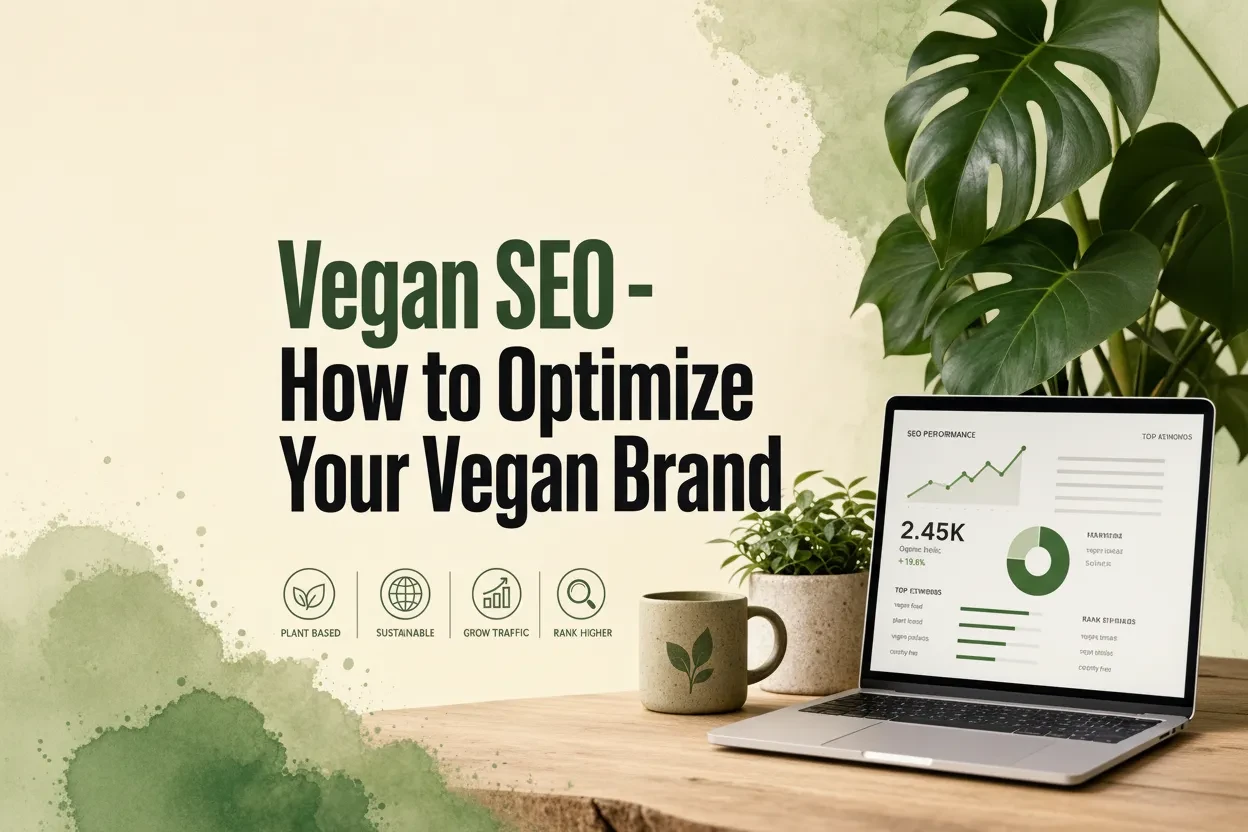
Vegan SEO – How to Optimize Your Vegan Brand Website for Organic Visibility
Why SEO matters for vegan businesses
Vegan SEO helps your website appear when people search for products or services you offer. Organic traffic comes from unpaid search results on Google. Unlike paid ads, these visits can continue after you stop spending on a campaign.
A strong search presence helps new customers find your brand when they search for vegan food, products, restaurants, services, or local businesses. More relevant visits can lead to more orders, bookings, and enquiries through your website.
The market also gives vegan businesses a strong reason to improve their online visibility. Research and Markets projects the global vegan food market to reach $46.09 billion by 2033. As more businesses enter the market, customers have more brands to choose from. This will open more opportunities if your website is optimized. At the same time, it will make the market competitive if it is not. See detailed statistics about the vegan food market in our recent combined report: https://vegandigital.net/vegan-food-market-statistics
Keyword Research – Find out what customers search for
Keyword research is the first and most important step of SEO. Because of this, I need to explore it more deeply. In the vegan brand niche, there are many terms like vegan, plant-based, cruelty-free, etc. You have to choose the right keyword from the beginning. I have noticed that many people get confused here.
Below is a keyword research result that I run for a keyword “vegan resturant near me” on a Google Keyword Planner. If you are new to this tool, it is completely free to use.
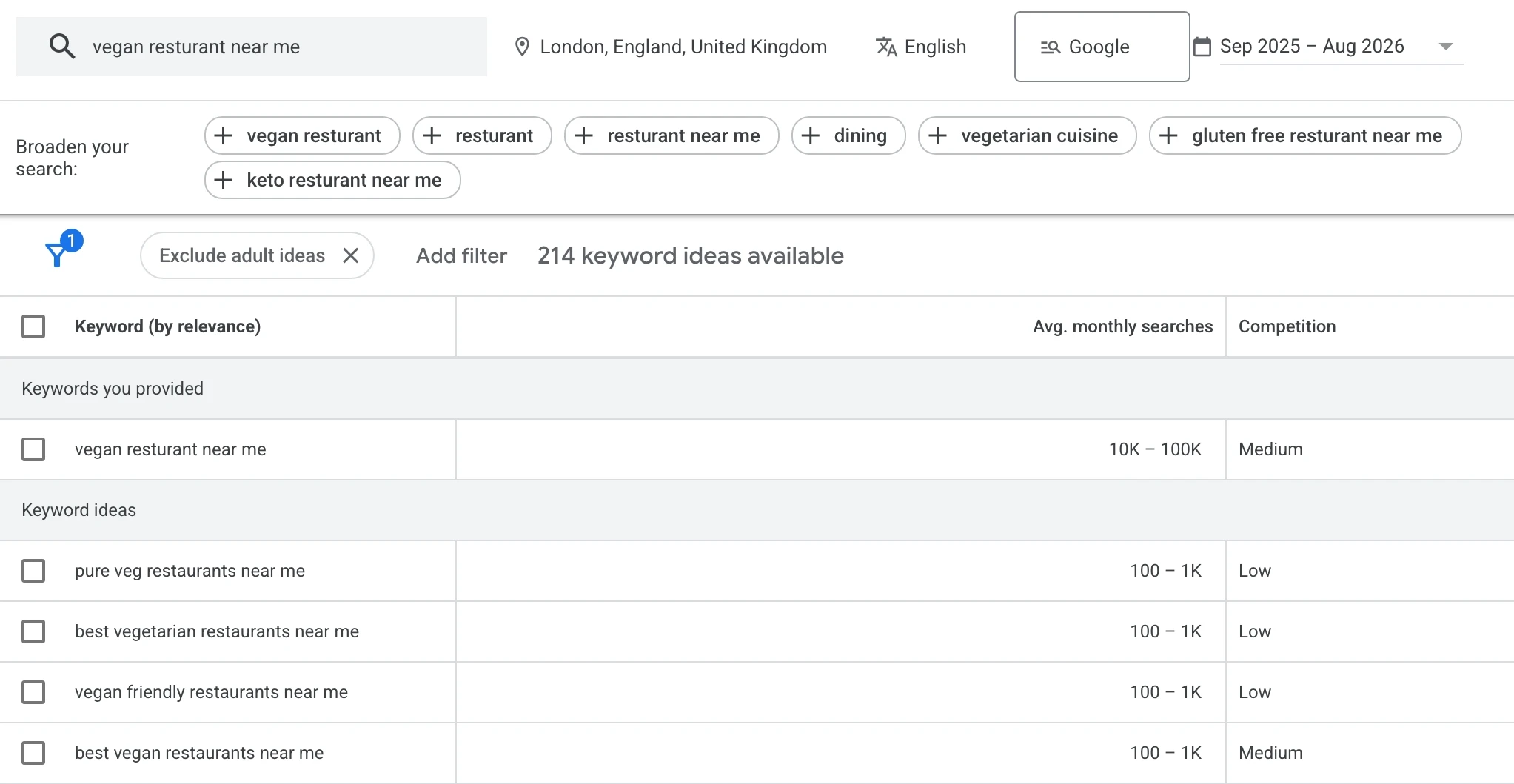
From the screenshot, you can see that in London alone, the keyword “vegan restaurant near me” gets approximately 10k-100k monthly searches. The same applies to similar keywords.
Make sure the keyword you choose has enough monthly searches and low competition.
You need to understand the different intent types. Someone who types “what is veganism” wants to learn(Informational Intent). Someone who types “buy vegan skincare” is ready to spend money(transactional intent). You need multiple types of search intent throughout the customer journey. Prioritize high-intent searches for immediate revenue.
Below are some examples:
- Buy vegan supplements online – Ready to purchase (Transactional)
- Best vegan protein powder – Comparing options (Commercial)
- How to start a vegan business – Seeking education (Informational)
- Vegan ecommerce store setup – Solving a problem (Informational)
- Vegan consulting services near me – Looking for providers (Commercial)
Below is another keyword research I conducted for the keyword “organic vegan protein powder” using Ubersuggest. The intent is marked as T for Transactional and C for Commercial.
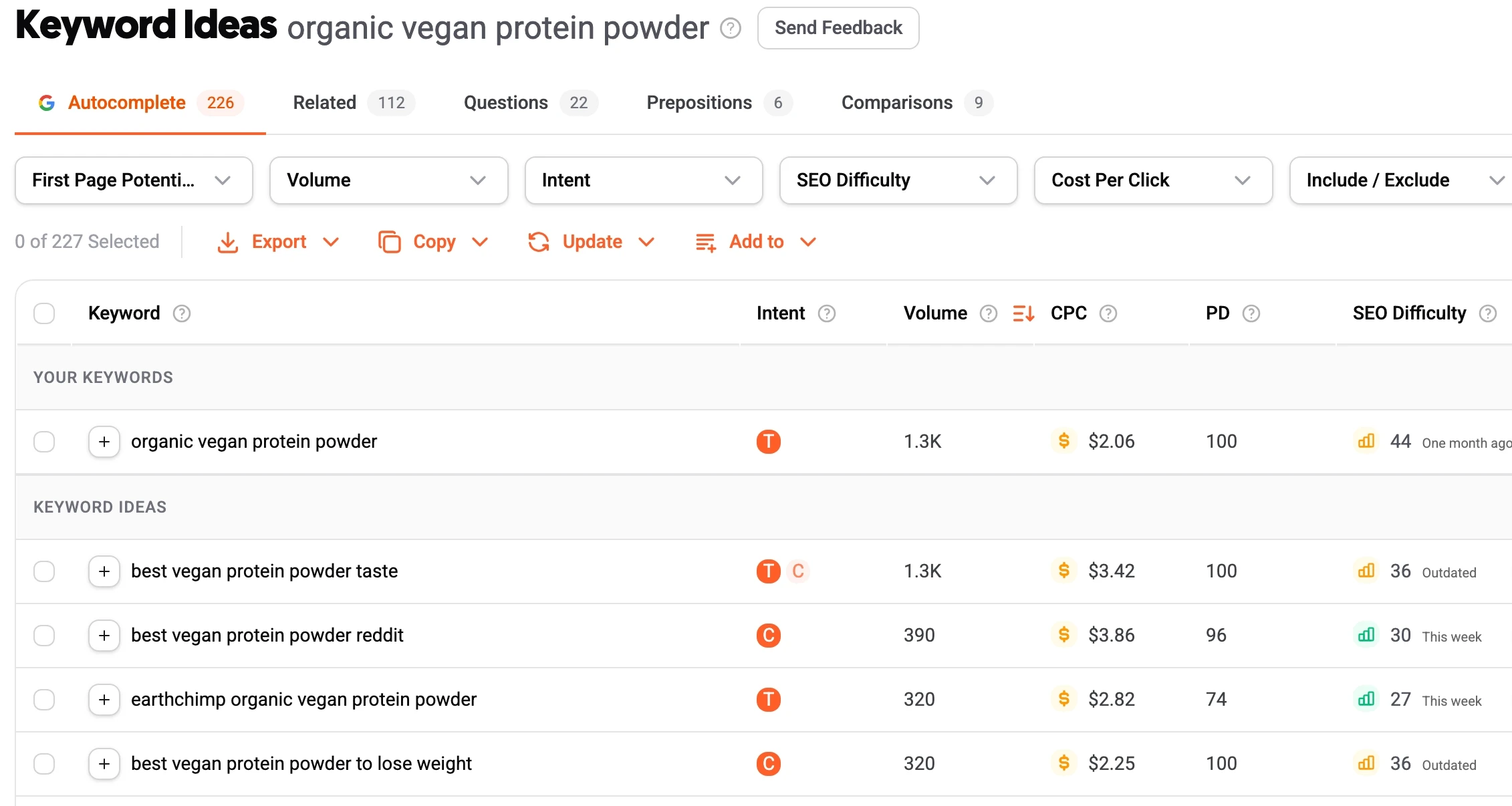
See how the volume and keyword difficulty is declining when it comes to long tail keywords? So choose long-tail keywords which have some volume. Even if the monthly searches are low, I highly recommend using a long-tail keyword. It will help you rank faster and attract the ideal customers for your business.
Identifying the right keywords will help improve your website’s ranking on Google search, local search, and AI-based GEO searches.
Create a Separate Website Page for Each Product and Service
Give each important product or service its own page. This lets you target different keywords, such as “vegan leather bags,” “vegan meal delivery,” or “vegan catering in [location].” A single page that lists everything can make it harder for search engines and customers to understand what your business offers.
Each product or service page should provide useful details, including:
- Ingredients or materials used
- Price or starting price
- Main benefits and features
- How the product or service meets vegan standards
- Vegan certifications or supporting evidence
- Clear, high-quality photos
- Answers to common customer questions
Vegan customers often want proof that a brand’s claims are genuine. Do not rely on vague phrases such as “cruelty-free” or “plant-based” without explaining what they mean. Name the certification where relevant, explain your sourcing standards, and share supporting information that helps customers make an informed choice.
Use clear photos that show the product from useful angles. For services, include images that help customers understand what they will receive. Add descriptive image file names and alternative text that match the page content without forcing the keyword.
Add a short FAQ section when customers often ask the same questions. For example, a product page could answer whether the item contains animal-derived ingredients, how it was made, and whether its packaging is vegan. Keep each answer direct and based on information your business can support.
Do the SEO basics
- Add keywords to page titles: Give each page a clear title that includes its main keyword, such as “Vegan Meal Plans” or “Vegan Skincare Products.”
- Use heading tags: Add one clear H1 to each page. Use H2 headings to organize the content, and include relevant keywords where they fit.
- Keep URLs short: Use simple URLs with the main keyword when appropriate, such as
/vegan-recipes/. - Name images clearly: Use descriptive file names, such as
vegan-chocolate-cake.jpg, instead ofIMG_2045.jpg. - Add internal links: Link to related pages, such as linking a vegan recipe to your meal plans.
- Improve page performance: Make pages fast and mobile-friendly.
- Simplify navigation: Help visitors find key pages with clear menus and labels.
- Avoid thin content: Give each page useful, original information. Remove pages with little value, repeated text, or only a few vague sentences.
Local SEO
Local search now includes more than Google. BrightLocal’s 2026 research found that 45% of consumers use generative AI tools for local business recommendations, up from 6% the previous year. Accurate business information can help your vegan restaurant or local business appear in more recommendations.
For restaurants and local vegan businesses, start by creating or updating your Google Business Profile. Add accurate opening hours, phone numbers, website details, address, and location information.
Upload clear photos of your space, dishes, products, or services. Add your menu or service list so people can quickly see what you offer before they visit.
Ask satisfied customers to leave genuine reviews. Never pay for reviews or create them yourself. Respond to reviews in a helpful and professional way.
List your business in relevant local directories and vegan directories. Keep your business name, address, phone number, and website consistent across every listing.
Optimize for LLMs(SEO for Generative AI (GEO)
Generative engine optimization, or GEO, helps AI search tools understand and mention your brand in answers. Clear, accurate content gives these tools useful information to draw from. GEO supports SEO, but it does not guarantee that an AI tool will recommend your business.
For example, a vegan bakery could publish a page that states, “All our cakes use plant-based ingredients and contain no eggs or dairy.” It could also list allergens, delivery areas, ingredients, and answers to common customer questions (FAQs).
Optimize for Voice Search and Image Search
Voice and image search are two areas many businesses still ignore. That creates an opening for businesses that make their products easier to find beyond typed keywords.
For voice search, use natural questions your customers may ask. For example, add an FAQ that answers, “Where can I buy vegan protein powder near me?” or “Is this oat milk gluten-free?” Keep answers short, clear, and accurate. Voice search has the potential to grow as more people use phones, smart speakers, and AI search tools.
Image search also matters for vegan products, where packaging, ingredients, and product appearance affect buying decisions. Use sharp original images, descriptive file names, and alt text such as “vegan dark chocolate bar with no dairy ingredients.”
Visual search already drives action. Google Lens receives more than 25 billion queries each month, and one in five Lens searches shows commercial intent. Users can snap a product photo, scan packaging, or circle an item on screen to compare options fast. Younger people who have used Circle to Search now start more than 10% of their searches with it. Source: https://business.google.com/ca-en/think/consumer-insights/holiday-marketing-strategy-visual-search-video/
Optimize your images
Image optimization helps your website load faster and appear in image search results. It also gives search engines more context about your products, recipes, and brand.
Use clear, descriptive file names before you upload an image. For example, use vegan-oat-milk-chocolate-bar.jpg instead of IMG_4821.jpg.
Add helpful alt text that describes what the image shows. Write Vegan oat milk chocolate bar with hazelnuts rather than vegan chocolate.
Compress large files and use modern formats such as WebP where possible. Large product photos can slow down pages, especially on mobile. Keep image dimensions close to the size you display on the page, so browsers do not need to load oversized files.
My personal favorite for optimizing images is https://squoosh.app/. It is free and easy to use.
Add Schema Markup
Schema markup is code that helps search engines understand your page content better. It can identify a vegan recipe, plant-based product, business location, review, or event in a clear format.
As per Google’s data, Rakuten found that users spend 1.5x more time on pages with structured data. They also have a 3.6x higher interaction rate on AMP pages with search features compared to non-feature AMP pages.
Use schema that matches the page:
- Recipe for vegan recipes, including ingredients, prep time, and nutrition details.
- Product for vegan food, supplements, skincare, or other items you sell.
- Organization for your brand details, logo, and social profiles.
- LocalBusiness for a vegan café, restaurant, shop, or service with a physical location.
- FAQPage for pages that answer common customer questions, where the content meets Google’s guidelines.
For example, a vegan skincare store can add Product schema to a page for a cruelty-free face cream:
{
  "@context": "https://schema.org",
  "@type": "Product",
  "name": "Vegan Hydrating Face Cream",
  "description": "A vegan face cream made without animal-derived ingredients.",
  "brand": {
    "@type": "Brand",
    "name": "Green Skin Co."
  },
  "offers": {
    "@type": "Offer",
    "price": "24.00",
    "priceCurrency": "USD",
    "availability": "https://schema.org/InStock"
  }
}
Schema can make your pages eligible for rich results, such as recipe cards with cooking time and ratings. It does not guarantee rich results. Google still decides which results to show.
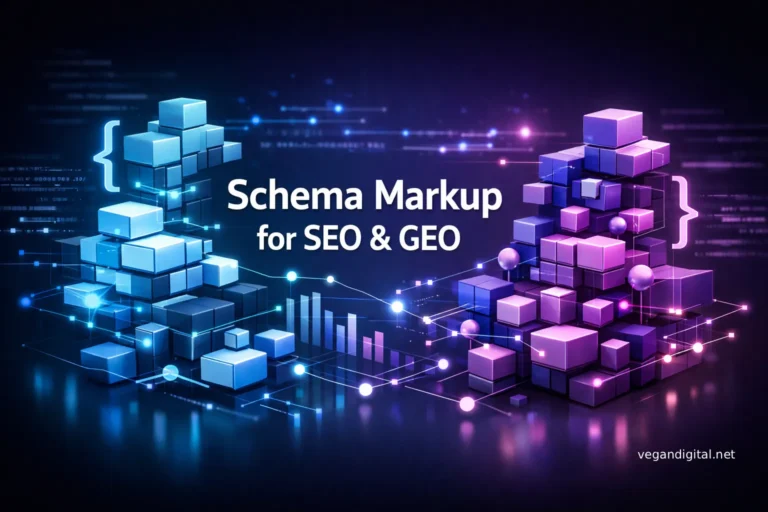
Want to learn more about schema markup? Check out this article: Schema Markup for SEO & GEO
Start a blog
A blog gives your vegan brand more chances to answer the questions people search for. It can bring in visitors before they know which product to buy, then guide them toward the right choice.
Write content that solves real customer needs, not content that repeats keywords. You can have topics about:
- Vegan product guides
- Ingredient explanations
- “Is this vegan?” articles
- Buying guides
- Recipes
- Product comparisons
- Local vegan guides
- Answers to common customer questions
For example, explain whether a confusing ingredient is vegan, compare two product types, or help readers find vegan options in a city. Helpful content builds trust and supports vegan SEO because it matches the questions your customers already have.
Strengthen Key Pages With Internal Links
Internal links connect one page on your website to another. They help visitors find related content and show search engines which pages matter most on your vegan website.
Link blog posts to useful product, category, service, and guide pages. For example, a post about plant-based protein could link to your vegan protein products or a guide to choosing vegan protein powder.
Choose important pages based on business value. Prioritize pages that drive sales, generate leads, explain core services, or target your main vegan SEO keywords. Link to these pages from relevant articles using clear anchor text, such as vegan skincare products or vegan meal delivery.
Avoid linking several pages with the same keyword focus. This can cause keyword cannibalization, where your pages compete against each other in search results. Give each page one clear purpose, then use internal links to support the strongest page for that topic.
Get mentioned by other websites
Backlinks are links from another website to your website. For example, if a vegan recipe blog links to your plant-based protein guide, that link is a backlink. Search engines may treat relevant, trusted backlinks as a sign that your site offers useful information.
The quality of a link matters more than the number of links. Domain Authority, or DA, is a third-party score that estimates a website’s link strength. A link from a respected vegan publication or established food organisation can carry more value than links from unrelated, low-quality sites.
To show you what a backlink profile looks like, I ran a quick audit on plant-based giant Oatly.com using Ubersuggest. As you can see, they have a domain authority of 61, a good number of referring domains and backlinks.
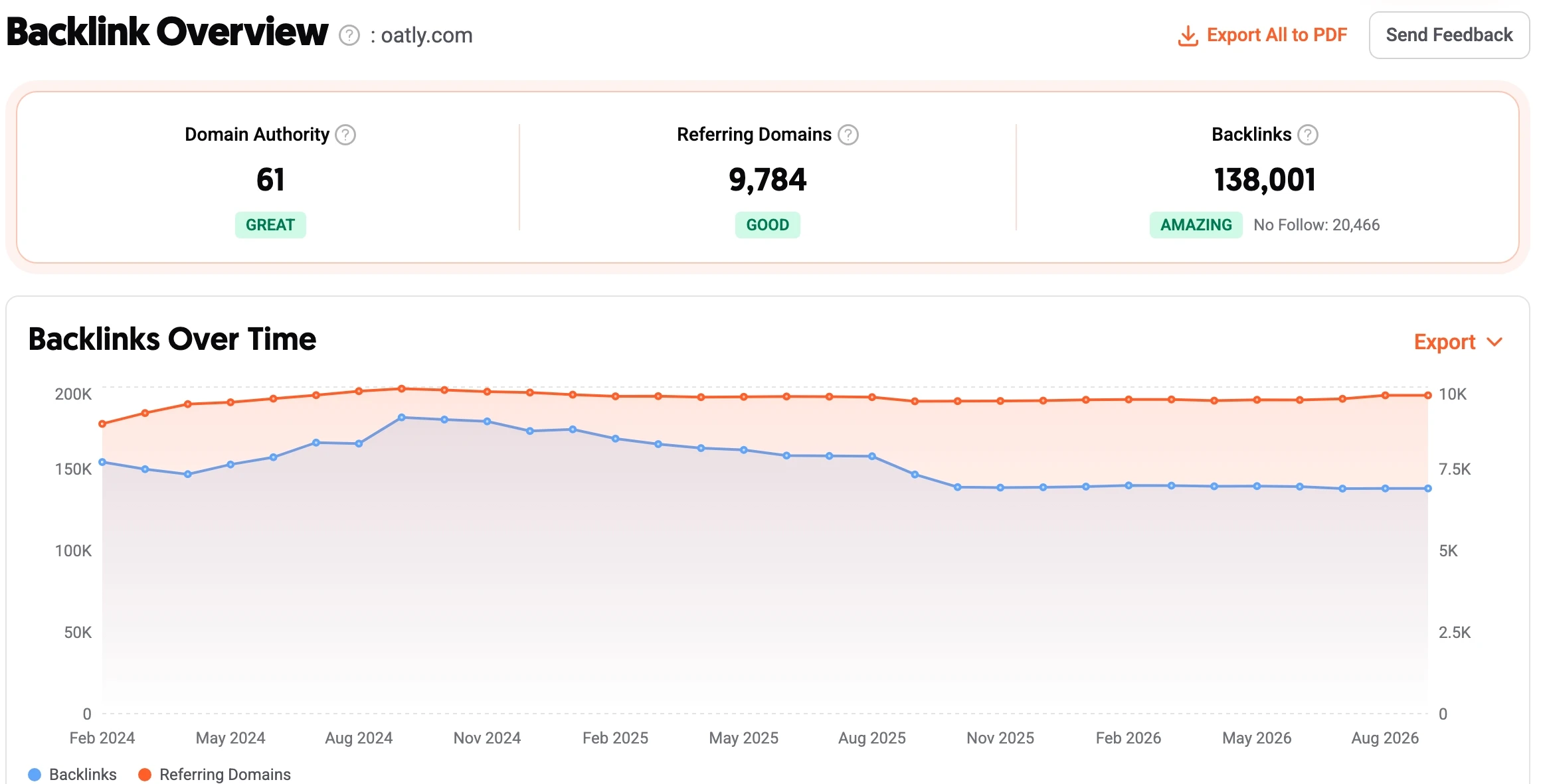
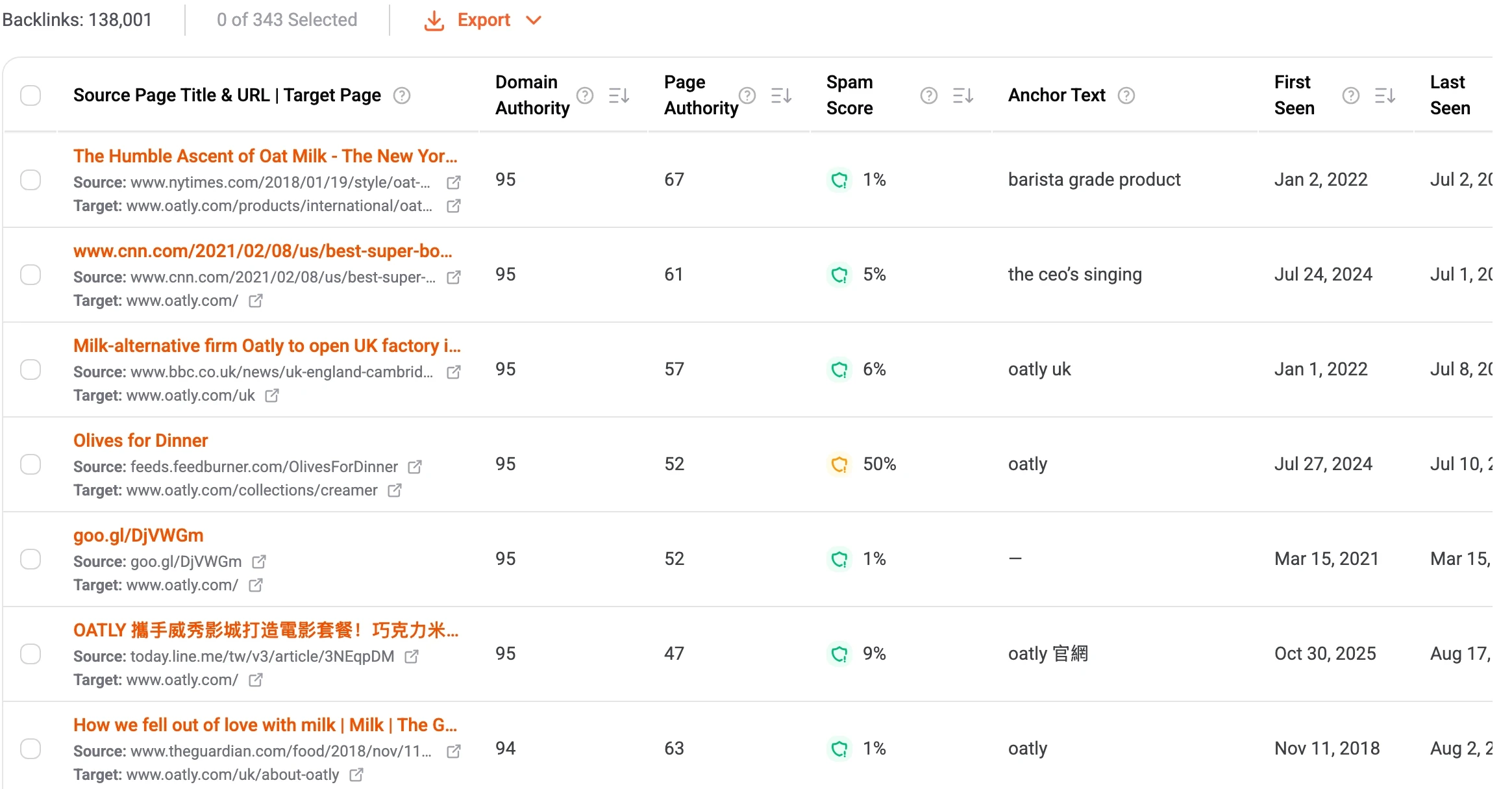
My Analysis: Looking at their specific referring domains, notice the mix of major publications and food blogs. Google sees these niche-relevant sources and recognizes Oatly as a trusted authority.
Build relevant mentions through genuine relationships and useful work:
- Join trusted directories for vegan businesses, ethical brands, local food services, or your industry.
- Work with vegan organisations on events, campaigns, resources, or sponsorships that fit your values.
- Contribute expert comments to journalists, bloggers, and podcasts covering vegan food, cruelty-free products, nutrition, or sustainability.
- Earn media coverage by sharing newsworthy launches, research, events, or community work.
- Partner with suitable businesses that serve the same audience without competing directly.
- Create content people want to reference, such as original guides, recipes, ingredient explainers, or helpful data.
Focus on links that make sense for readers. Avoid buying links, joining link schemes, or placing your site on irrelevant directories.
Set Up Tools and Measure Results
You cannot improve vegan SEO without knowing what works. Set up Google Analytics to track organic visits, page views, user actions, and sales or sign-ups.
Connect your site to Google Search Console. It shows which search terms bring people to your website, which pages appear in Google, and any indexing problems that need attention. Bing Webmaster Tools is a powerful free tool.
Submit your XML sitemap through Search Console so Google can find your key pages, including product, recipe, blog, and collection pages.
Add a robots.txt file to guide search crawlers away from pages that should not appear in search, such as admin areas, internal search results, or duplicate filter pages. Check Search Console often for crawl errors, broken pages, and pages Google has not indexed.
FAQ
How does vegan SEO differ from traditional SEO?
The core methods stay the same. You still need a fast website, useful pages, clear site structure, and trusted links.
The difference is audience language and proof. Vegan shoppers may search for terms such as plant-based, dairy-free, cruelty-free, or certified vegan. Your content should match those terms without making claims you cannot support.
What tools should a vegan brand use for SEO?
Start with Google Search Console to see which searches bring visitors to your site and to find indexing issues.
Use Google Analytics to track actions such as purchases, sign-ups, and contact form submissions. Keyword research tools can help you find search terms, compare competitors, and spot content gaps. For advaced SEO, you can use Ahrefs or Semrush.
How long does it take to rank in search results?
SEO takes time because search engines need to crawl, assess, and compare your pages with other results. Some improvements can appear within weeks, especially after you fix technical errors or update an existing page.
More competitive searches often take months of steady work. Your timeline depends on your site’s age, competition, content quality, and the trust your brand has earned online.
Should I target “vegan” or “plant-based” keywords?
Target the wording your customers use. Vegan often signals a clear ethical or dietary standard. Plant-based can attract a wider audience, including people who want more plant-focused food but do not follow a vegan lifestyle.
Research both terms before choosing. Use each phrase only where it fits the product, page purpose, and claims you can verify.
Do vegan certifications help SEO?
A certification does not create rankings on its own. It can help customers trust your brand when you explain it clearly on relevant pages.
Show certification details, link to the certifying body where appropriate, and keep claims current. Clear evidence supports trust, which can improve how people respond to your listing and website.
Can product pages rank, or do I need a blog?
Product pages can rank when they answer buying questions. Include clear product details, ingredients or materials, dietary information, shipping details, and FAQs.
A blog can support product pages by covering broader questions. For example, a food brand might create guides about vegan ingredients, while linking readers to relevant products.
When should I hire an SEO agency?
Hire an agency when your team lacks time or technical skill, or when organic search has become an important growth channel. An agency can also help after a site redesign, a major traffic drop, or an expansion into new product categories.
Does local SEO matter for a vegan business?
Yes, if you run a shop, café, restaurant, clinic, or other location-based business. Keep your business name, address, hours, website, and contact details accurate across your Google Business Profile and other listings.
Encourage genuine customer reviews and respond to them. Local pages should also explain what makes each location useful to vegan customers.
Vegan SEO works best when it combines clear search strategy with honest brand claims. Focus on the questions your customers ask, prove what you say, what they need and improve your site over time.